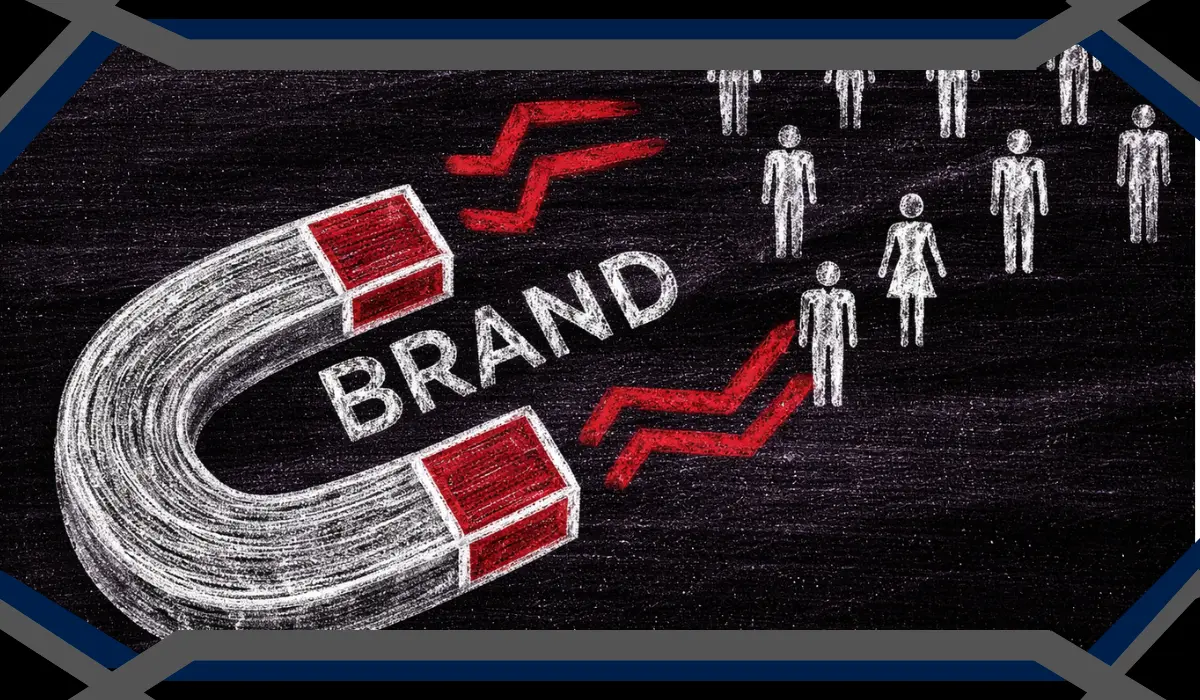
In today’s digital-first economy, attention is easy to earn but difficult to keep, and even harder to convert into long-term loyalty. Products can be replicated, marketing tactics can be copied, and competitors can emerge almost instantly. What cannot be easily duplicated is trust. For founders, trust has become the most valuable form of capital because it influences every stage of business growth-from attracting early customers to securing funding and recruiting top talent.
Personal branding is the mechanism that allows founders to systematically build this trust. It is not about self-promotion or visibility alone. Instead, it is about shaping how people perceive a founder’s competence, values, and reliability over time. When done effectively, personal branding turns the founder into a trusted signal for everything the company does.
The strongest founders understand that people do not just buy products-they buy belief in the person behind them.
What Personal Branding Really Means for Founders
Personal branding is often misunderstood as curated social media presence or content creation. In reality, it is the consistent alignment between what a founder believes, what they say publicly, and what they actually build.
For founders, personal branding operates as a reputation system. It answers three subconscious questions in the minds of audiences: Can this person execute? Do they think clearly? And do they behave with integrity?
A strong example of intellectual consistency in personal branding is Naval Ravikant, whose reputation is built not on a single company but on years of consistent public thinking around startups, wealth creation, and decision-making. His influence demonstrates that clarity of thought itself can become a powerful brand asset.
Why Trust Is the Foundation of Business Growth
Trust is not a soft metric; it directly affects measurable business outcomes. When trust is high, friction decreases across the entire customer journey. People require less convincing, decisions are made faster, and skepticism is reduced.
For early-stage founders, trust often matters more than product maturity. A strong founder reputation can help an imperfect product gain adoption, while a weak reputation can slow down even the best product.
Trust also compounds across multiple areas of business. Investors are more likely to back founders they believe in, customers are more willing to try new offerings, and employees are more motivated to join teams led by credible leaders. In this way, personal branding becomes a multiplier of business performance.
Authenticity as the Core of Founder Credibility
Authenticity is one of the strongest drivers of trust in personal branding. Audiences are highly sensitive to inconsistency between messaging and reality. When founders present overly polished or unrealistic narratives, credibility erodes over time.
Authenticity does not mean revealing every detail of personal or business life. Instead, it means ensuring that what is shared reflects genuine experience, including challenges and failures.
Sara Blakely, founder of Spanx, is a strong example of authenticity-driven branding. Her willingness to openly discuss rejection, experimentation, and early struggles makes her success feel relatable and earned rather than distant or unattainable. This emotional honesty strengthens trust because it reflects reality rather than idealization.
Consistency: The Long-Term Engine of Trust
If authenticity creates connection, consistency builds reliability. Trust is not formed through a single interaction but through repeated exposure to stable behavior, messaging, and values.
Founders who frequently shift their opinions or public positioning make it difficult for audiences to form a stable perception of who they are. Over time, this inconsistency weakens credibility because people cannot predict how the founder will think or act in the future.
Consistency does not require rigidity. Ideas can evolve, strategies can shift, and businesses can pivot. However, the underlying principles guiding decisions should remain coherent. This continuity creates a sense of dependability, which is essential for long-term trust building.
Demonstrated Execution: Turning Ideas into Proof
In founder personal branding, credibility is earned through execution rather than claims. Audiences trust what they can observe being built, shipped, or improved over time.
A founder who consistently demonstrates progress naturally builds authority because action is more persuasive than words. Execution transforms abstract ideas into tangible proof of capability.
Elon Musk illustrates this principle clearly. His personal brand is deeply tied to visible execution across industries such as electric vehicles, space exploration, and energy systems. Regardless of differing public opinions, the perception of capability is reinforced through consistent, high-visibility outcomes.
Transparency and the Importance of Explaining “Why”
Modern audiences are increasingly skeptical of surface-level communication. They want to understand the reasoning behind decisions, not just the outcomes. This makes transparency a critical component of founder personal branding.
When founders explain the “why” behind their decisions, they reduce uncertainty and build intellectual alignment with their audience. Even when people disagree with a decision, they are more likely to respect it if the reasoning is clear.
Transparency also becomes especially important during failures or pivots. Founders who openly explain trade-offs and constraints maintain trust even when results are not favorable because their decision-making process remains visible and logical.
Storytelling as a Trust-Building Tool
While logic builds understanding, storytelling builds emotional connection. Founders who communicate their journey through narrative create deeper resonance with their audience.
A compelling founder story is not just a timeline of events; it is a structured narrative that includes motivation, struggle, transformation, and insight. This structure helps audiences connect emotionally and intellectually with the founder’s journey.
Oprah Winfrey exemplifies the power of storytelling in personal branding. Her influence is rooted in her ability to consistently transform personal experiences into universal narratives that resonate deeply with diverse audiences. This emotional connection significantly strengthens trust and long-term influence.
Platforms That Shape Founder Trust
Different platforms contribute to personal branding in different ways, and successful founders understand how to use each strategically.
LinkedIn serves as a professional credibility hub where structured insights and industry perspectives are shared. X (formerly Twitter) enables real-time thinking and participation in ongoing conversations, which helps shape perception through immediacy and visibility.
Long-form platforms such as podcasts or interviews provide depth and allow audiences to understand nuance, personality, and reasoning. Meanwhile, blogs and newsletters offer founders full control over narrative without algorithmic interference.
Effective founder branding is not about being active everywhere, but about maintaining consistency across selected platforms while adapting format and depth to each one.
Common Mistakes That Damage Founder Personal Branding
Many founders unintentionally weaken their personal brand by misunderstanding how trust is built.
One common mistake is over-promotion without delivering meaningful value. When every message is focused on selling rather than sharing insight, audiences disengage quickly.
Another major issue is inconsistency between public statements and private behavior. When audiences notice misalignment, trust deteriorates rapidly and is difficult to rebuild.
Founders also often make the mistake of trying to appeal to everyone. This leads to diluted messaging and weak positioning. Strong personal brands are built on clear perspectives, even if they are not universally accepted.
To avoid these pitfalls, founders must prioritize clarity, consistency, and substance over short-term attention.
The Psychology Behind Trust in Personal Branding
Trust is not purely rational; it is deeply psychological. People continuously evaluate founders based on three core dimensions: competence, integrity, and intent.
Competence refers to the ability to execute and deliver results. Integrity reflects honesty and alignment between words and actions. Intent represents perceived motivation-whether the founder genuinely cares about users or is driven purely by self-interest.
When personal branding aligns with all three dimensions, trust becomes almost automatic. Audiences no longer need to be convinced repeatedly because belief becomes the default state.
Building a Long-Term Trust Asset
Successful founders treat personal branding as a long-term asset rather than a short-term visibility strategy. It is built through continuous documentation of work, transparent communication, and consistent presence over time.
One of the most effective approaches is building in public. This means sharing the process of creation rather than only showcasing results. It allows audiences to observe growth, decision-making, and learning in real time.
Over time, this creates a compounding effect where each interaction strengthens the overall perception of credibility. Trust accumulates slowly, but once established, it becomes extremely durable.
Conclusion: Trust Is the Ultimate Founder Advantage in Personal Branding and Business Growth
In an environment where competition is constant and attention is fragmented, trust has become the most powerful differentiator for founders. Personal branding is the structured process through which this trust is built, maintained, and amplified.
The most successful founders understand that their reputation is not separate from their business-it is the foundation of it. Every decision, every communication, and every product release contributes to a larger narrative that shapes how they are perceived.
Founders like Naval Ravikant, Sara Blakely, Elon Musk, and Oprah Winfrey demonstrate that personal branding is not about popularity-it is about trust at scale.
Ultimately, products may change, markets may shift, and strategies may evolve, but trust remains the one advantage that compounds over time. For founders, building it through personal branding is not optional-it is essential.
Leave a Reply