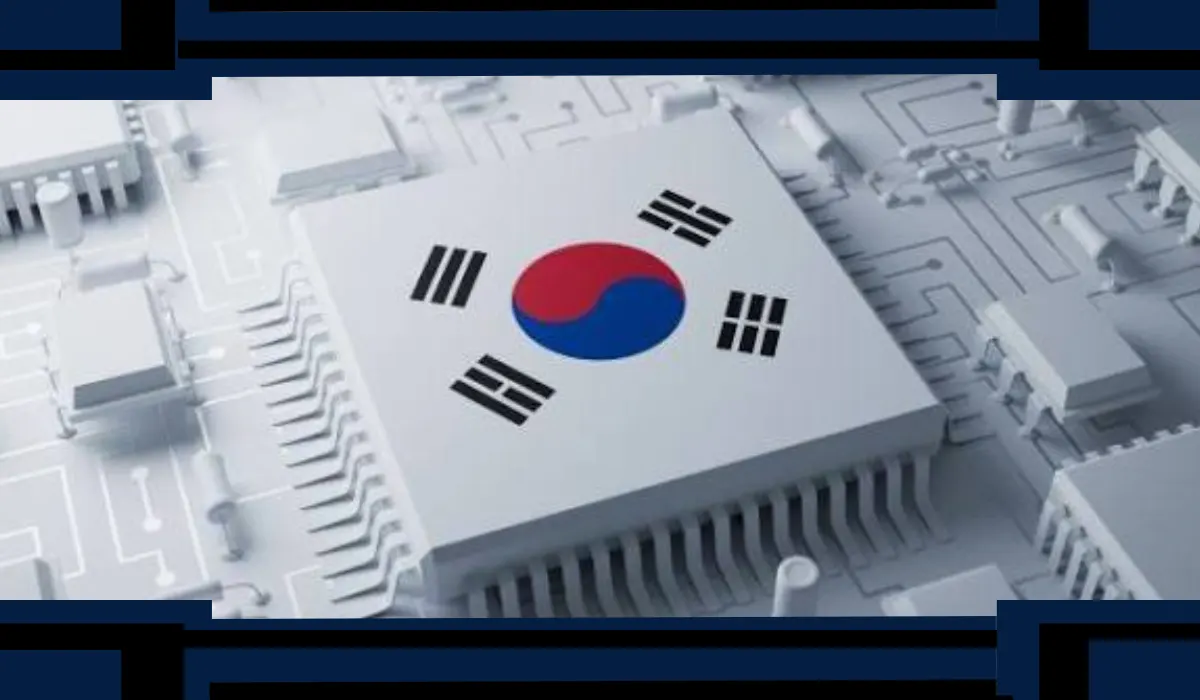
South Korea’s AI Chip Boom is sending a strong signal about where governments and institutional investors see the future of technology. South Korea has unveiled an ambitious $518 billion investment plan to strengthen its artificial intelligence chip industry, focusing on expanding semiconductor manufacturing, accelerating AI research, strengthening supply chains, and developing the talent needed to compete in the global AI race.
The announcement reflects a broader trend in the technology sector. While cryptocurrency continues to evolve and attract long-term supporters, artificial intelligence has become the primary destination for government funding and institutional capital. From semiconductor manufacturers to AI software companies, investment is flowing rapidly into technologies with immediate commercial applications and strategic importance.
For South Korea, the investment is more than an economic initiative,it’s a long-term strategy to secure leadership in one of the world’s fastest-growing industries.
Why South Korea Is Going All-In on AI
South Korea has long been one of the world’s leading semiconductor producers. Companies such as Samsung Electronics and SK Hynix already dominate the global memory chip market, supplying components used in smartphones, computers, servers, and consumer electronics.
Now, the government wants to extend that leadership into AI chips, which power technologies such as generative AI, machine learning, autonomous vehicles, robotics, and cloud computing.
The investment package will support new semiconductor fabrication plants, research and development programs, workforce training, and supply-chain resilience. By strengthening every stage of AI chip production, South Korea hopes to reduce dependence on foreign manufacturing while becoming one of the world’s leading suppliers of advanced processors.
Industry analysts believe AI chips will become one of the most valuable segments of the semiconductor market over the next decade as demand continues rising across nearly every industry. The South Korea AI Chip Boom reflects the country’s determination to capture a leading share of this rapidly expanding market.
AI Chips Have Become a Strategic Asset
Artificial intelligence has moved beyond being simply another technology trend. Governments increasingly view AI as a strategic national asset capable of driving economic growth, improving productivity, and strengthening national security.
Unlike traditional computer chips, AI processors are specifically designed to handle enormous amounts of data required for machine learning models. These chips have become essential infrastructure for companies building advanced AI systems.
As businesses adopt AI across healthcare, manufacturing, finance, education, transportation, and cybersecurity, demand for powerful computing hardware continues to grow rapidly.
South Korea’s investment reflects its belief that controlling AI infrastructure will be just as important as leading software innovation.
Investors Are Clearly Choosing AI Over Crypto
The timing of South Korea’s announcement also highlights changing investment priorities.
Over the past year, institutional investors have directed significant amounts of capital toward AI companies, semiconductor manufacturers, cloud infrastructure providers, and data center operators. Venture capital firms have also increased funding for AI startups developing enterprise software, automation tools, and machine learning platforms.
By comparison, cryptocurrency investment has become more selective.
Although Bitcoin and Ethereum remain the dominant digital assets, many investors have reduced exposure to speculative blockchain projects following years of market volatility and tighter regulatory oversight.
Industry data suggests AI startups have attracted substantially more venture funding than blockchain companies throughout 2026, reflecting stronger confidence in businesses with established revenue opportunities and widespread commercial adoption.
Why AI Is Winning the Investment Race
Several factors explain why investors currently favor AI over cryptocurrency.
First, AI is already delivering measurable business value. Companies are using AI to automate customer service, improve manufacturing efficiency, analyze medical data, detect fraud, and optimize logistics. These applications generate immediate financial benefits for businesses.
Second, governments around the world are actively supporting AI development through public funding, tax incentives, and industrial policies. South Korea joins countries including the United States, China, Japan, and members of the European Union that are investing heavily in AI infrastructure.
Finally, many investors view AI as a lower-risk opportunity because demand continues expanding across multiple industries. While cryptocurrency still experiences sharp price swings, AI companies often generate recurring revenue through software subscriptions, cloud services, and enterprise solutions.
Together, these factors have made artificial intelligence one of the technology sector’s strongest investment themes, with South Korea’s AI Chip Boom serving as one of the latest examples of this global trend.
Crypto Still Faces Important Challenges
The cryptocurrency industry continues to grow, but it also faces several ongoing challenges.
Regulatory uncertainty remains one of the biggest concerns for institutional investors. Different countries continue developing new rules governing exchanges, stablecoins, digital assets, and decentralized finance, creating uncertainty for businesses operating globally.
Market volatility is another challenge. Although Bitcoin and Ethereum have remained relatively resilient compared to smaller cryptocurrencies, sharp price movements continue making digital assets a higher-risk investment for many institutions.
In addition, many blockchain projects are still working to demonstrate clear real-world utility beyond speculation. While decentralized finance, tokenization, and blockchain infrastructure continue advancing, broader mainstream adoption remains a work in progress.
Could AI and Crypto Work Together?
Despite growing comparisons between AI and cryptocurrency, many experts believe the two technologies are more complementary than competitive.
Blockchain technology could help improve AI by providing transparent records of AI-generated content, securing datasets, verifying digital identities, and supporting decentralized computing networks.
Similarly, AI could improve blockchain applications by enhancing fraud detection, automating smart contract analysis, improving cybersecurity, and optimizing decentralized networks.
Rather than replacing one another, both technologies may eventually evolve together, solving different problems within the digital economy.
What South Korea’s Strategy Means for the Future
South Korea’s investment is expected to strengthen its position in the global semiconductor industry while creating thousands of highly skilled jobs and attracting additional private investment.
The initiative also increases competition with other technology leaders, including the United States, Taiwan, and China, all of which are investing heavily in semiconductor manufacturing and AI infrastructure.
For cryptocurrency companies, the announcement serves as a reminder that attracting institutional capital increasingly depends on demonstrating practical value, regulatory compliance, and sustainable business models.
Governments and investors are prioritizing technologies that generate measurable economic benefits today while laying the foundation for future innovation.
Final Thoughts
South Korea’s AI Chip Boom highlights the growing importance of artificial intelligence in shaping the global technology landscape.
While cryptocurrency remains an important part of the digital economy, AI is currently attracting greater government support, institutional funding, and commercial adoption. The difference reflects how investors increasingly prioritize technologies capable of delivering immediate business value while supporting long-term economic growth.
Rather than signaling the end of crypto, South Korea’s announcement illustrates how the technology sector is entering a new phase where AI infrastructure has become a national priority.
As global competition intensifies, countries investing aggressively in semiconductors and artificial intelligence may be best positioned to lead the next generation of technological innovation. Meanwhile, the cryptocurrency industry will need to continue proving its real-world value if it hopes to compete for the same level of institutional attention and investment.
Leave a Reply