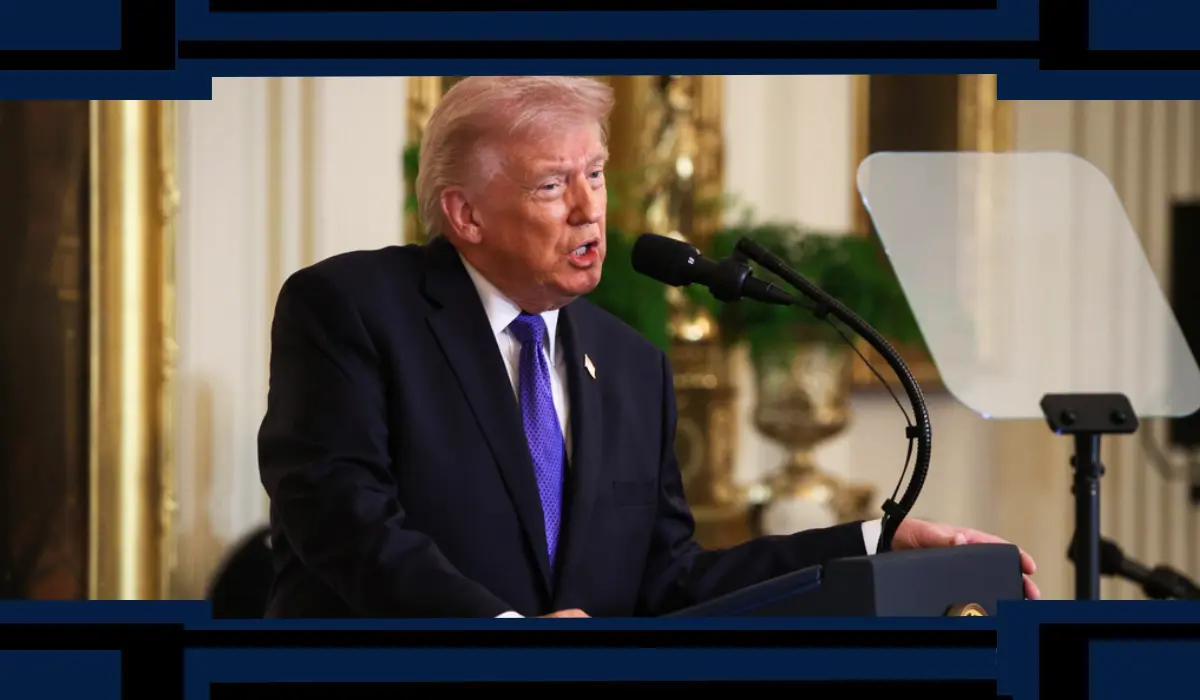
The United States crypto industry is approaching a defining regulatory moment as President Donald Trump intensifies efforts to push the CLARITY Act toward a Senate vote. The legislation has become the centerpiece of Washington’s attempt to establish a long-awaited framework for digital assets, separating the responsibilities of the Securities and Exchange Commission (SEC) and the Commodity Futures Trading Commission (CFTC).
The bill has already moved through a key congressional stage after the Senate Banking Committee advanced it in a bipartisan vote. However, the legislation now faces a much more difficult challenge on the Senate floor, where lawmakers must resolve disagreements over enforcement authority, decentralized finance rules, stablecoin oversight, and ethics concerns surrounding political involvement in crypto.
For investors, exchanges, and blockchain companies, the outcome could determine whether the United States becomes a leading hub for digital asset innovation or continues operating under fragmented regulatory rules.
CLARITY Act Moves Toward Historic Crypto Market Framework
The Digital Asset Market Clarity Act, commonly known as the CLARITY Act, represents one of the most significant attempts by US lawmakers to define cryptocurrency regulation. The legislation aims to replace years of uncertainty with a structured system that explains how different digital assets should be classified.
Currently, the crypto industry has operated under overlapping regulatory expectations. The SEC has argued that many digital assets qualify as securities, while the CFTC has claimed authority over certain crypto commodities. This conflict has created uncertainty for companies developing blockchain networks, launching tokens, or offering trading services.
The CLARITY Act attempts to solve this issue by creating clearer boundaries.
Under the proposed framework:
- The SEC would continue overseeing digital assets considered securities.
- The CFTC would gain broader authority over qualifying digital commodities.
- Crypto exchanges and brokers would receive clearer compliance requirements.
- Investors would gain more transparency regarding asset classification.
Supporters believe this approach could reduce enforcement-driven regulation and provide businesses with predictable rules.
Trump’s Push Adds Political Pressure Before Senate Vote
Trump has made cryptocurrency policy a major part of his economic agenda. His administration has promoted the idea that clearer rules could encourage innovation, attract blockchain companies, and prevent crypto businesses from relocating to countries with more defined regulations.
Recently, Trump urged Senate lawmakers to advance the CLARITY Act, increasing pressure on Congress to complete negotiations. The push comes as lawmakers face a limited legislative window and growing disagreement over the final version of the bill.
The administration argues that the United States must compete with global markets developing digital asset industries. Supporters claim that regulatory uncertainty has slowed investment and forced companies to spend resources navigating unclear legal requirements.
However, opponents argue that faster regulation should not come at the expense of stronger consumer protections.
Senate Approval Remains the Biggest Challenge
Although the CLARITY Act gained momentum after advancing through the Senate Banking Committee, passing the full Senate requires overcoming significant political barriers. The legislation needs broad support because major procedural votes typically require 60 votes to advance.
The Senate debate has become increasingly complicated due to disagreements between Democrats and Republicans. While both sides support establishing crypto rules, lawmakers differ on how strict those rules should be.
Key disagreements include:
| Issue | Main Debate |
| SEC and CFTC Authority | How much power each regulator should receive |
| Stablecoins | Consumer protection and competition concerns |
| DeFi Regulation | Whether decentralized platforms need direct oversight |
| Ethics Rules | Restrictions involving government officials and crypto interests |
Negotiators have reportedly been working on revised versions of the legislation, but bipartisan agreement remains uncertain.
Ethics Debate Creates Additional Pressure
One of the biggest political challenges involves concerns about conflicts of interest. Critics have questioned whether government officials with cryptocurrency-related financial interests should influence regulations affecting the industry.
The debate has added another layer of complexity to Senate negotiations. Some lawmakers want stronger ethics provisions included in the bill before supporting final passage.
Supporters of the legislation argue that regulatory decisions should focus on creating clear market rules rather than political disputes. However, opponents believe transparency requirements are necessary to maintain public trust.
This issue could determine whether the bill gains enough bipartisan support to move forward.
Potential Impact on Bitcoin, Ethereum, and Crypto Markets
A successful CLARITY Act vote could have major implications for cryptocurrency markets. Regulatory uncertainty has been one of the biggest barriers preventing some institutions from increasing digital asset exposure.
For Bitcoin and Ethereum, clearer regulations could improve investor confidence. Institutional investors often require predictable legal frameworks before expanding positions in emerging asset classes.
Crypto exchanges could also benefit from clearer operating rules. Companies would have better guidance on registration, compliance obligations, and market responsibilities.
The potential benefits include:
- Increased institutional participation
- Greater confidence among traditional financial firms
- More blockchain development in the US
- Reduced legal uncertainty for crypto businesses
However, regulation alone would not eliminate market volatility. Cryptocurrency prices would continue to depend on economic conditions, liquidity, investor demand, and broader financial trends.
Stablecoins and DeFi Remain Critical Issues
Stablecoins represent one of the most important areas of the CLARITY Act debate. These digital assets are widely used for trading, payments, and transfers because they maintain a stable value compared with traditional cryptocurrencies.
Lawmakers are examining how stablecoin issuers should operate, what reserves they should maintain, and whether certain reward programs create banking-like risks.
Decentralized finance is another difficult issue. DeFi platforms operate differently from traditional financial companies because many systems use automated smart contracts instead of centralized management.
Regulators want to prevent illegal activity while avoiding rules that could restrict blockchain innovation.
Finding a balance between oversight and innovation remains one of the biggest challenges facing lawmakers.
What the CLARITY Act Means for the Future of US Crypto Policy
The outcome of the Senate vote could define the direction of US cryptocurrency policy for years. If lawmakers approve the legislation, the United States could establish one of the most comprehensive digital asset frameworks among major economies.
A successful vote could encourage companies to build blockchain products domestically rather than moving operations overseas.
On the other hand, failure could extend the current regulatory uncertainty. Companies may continue facing unclear enforcement risks, while investors may remain cautious about long-term crypto exposure.
The bill’s future depends on whether lawmakers can find common ground between encouraging innovation and protecting consumers.
Conclusion
Trump’s CLARITY Act push has placed cryptocurrency regulation at the center of the US financial policy debate. The legislation represents a major effort to create clearer rules for digital assets and define the roles of federal regulators.
While the bill has already achieved important progress, the Senate vote remains a critical test. Political disagreements over ethics, stablecoins, and regulatory authority continue to create obstacles.
For the crypto industry, the stakes are high. Approval could provide the regulatory certainty companies have requested for years, while failure could prolong uncertainty in one of the fastest-growing sectors of global finance.
As lawmakers approach the final negotiations, the CLARITY Act has become more than a crypto bill. It represents a broader decision about how the United States plans to regulate the future of digital finance.
Leave a Reply