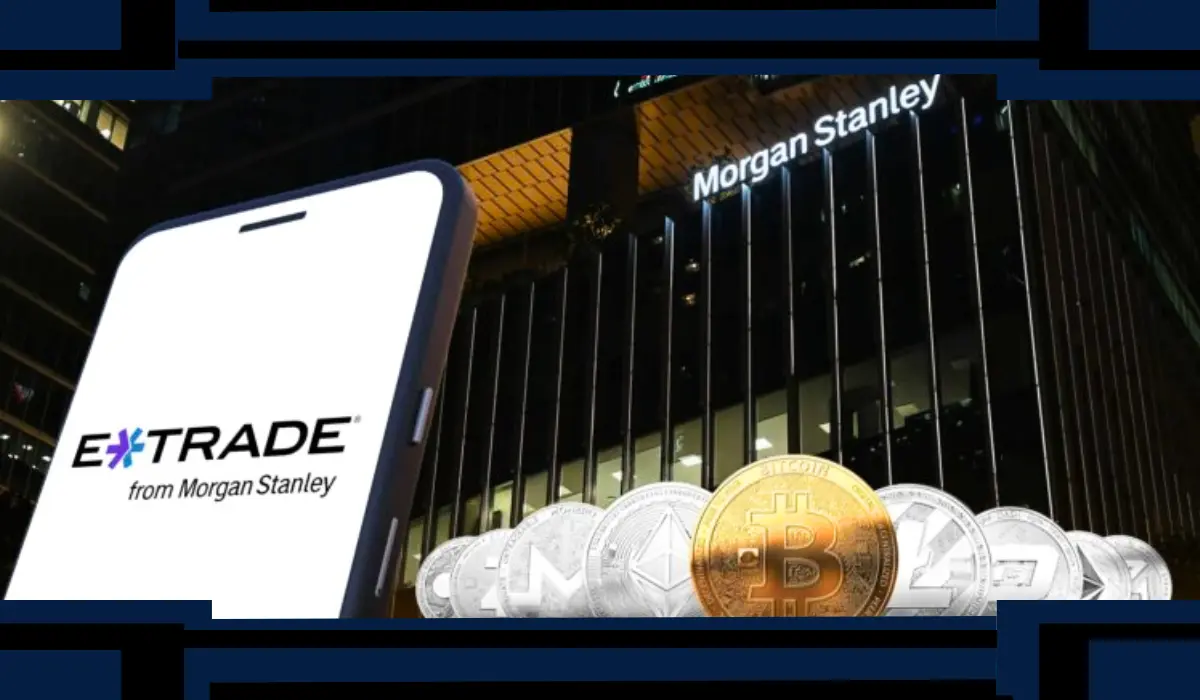
Morgan Stanley has officially expanded its presence in the cryptocurrency market by launching spot crypto trading for eligible retail customers through its E*TRADE platform. The rollout marks one of the most significant digital asset initiatives undertaken by a major U.S. investment bank in 2026 and reflects Wall Street’s growing confidence in regulated cryptocurrency services. The new offering allows customers to buy, sell, and hold major cryptocurrencies directly alongside traditional investments within their existing brokerage accounts.
The move represents more than a product launch. It demonstrates Morgan Stanley’s broader strategy to integrate digital assets into mainstream wealth management while competing with established crypto exchanges and other financial institutions expanding into blockchain-based services. As regulatory clarity improves and institutional adoption accelerates, the company appears determined to position E*TRADE as a comprehensive investment platform for both conventional and digital assets.
Morgan Stanley Brings Crypto Trading to E*TRADE Customers
The nationwide rollout enables eligible U.S. customers to trade Bitcoin (BTC), Ethereum (ETH), and Solana (SOL) through linked accounts powered by digital asset infrastructure provider Zero Hash. Rather than requiring investors to open separate cryptocurrency exchange accounts, E*TRADE integrates digital asset access directly into its existing brokerage ecosystem.
This integration simplifies the investment experience by allowing users to monitor crypto holdings alongside stocks, ETFs, options, and other investment products. Consequently, investors can manage diversified portfolios from a single platform while benefiting from Morgan Stanley’s established financial infrastructure.
Industry analysts view the launch as another milestone in the convergence of traditional finance and digital assets. Instead of treating cryptocurrency as a niche investment, large financial institutions increasingly regard it as a permanent component of modern portfolio management.
A Strategic Step in Morgan Stanley’s Digital Asset Expansion
Morgan Stanley has gradually increased its exposure to digital assets over the past several years. The firm’s wealth management division previously offered Bitcoin investment products to qualified clients and has steadily expanded crypto-related investment opportunities.
The E*TRADE rollout significantly broadens access by targeting retail investors rather than only high-net-worth clients. This approach aligns with the company’s long-term strategy of integrating innovative financial products into its mainstream investment services.
The expansion also complements Morgan Stanley’s broader digital asset initiatives, including proposed cryptocurrency exchange-traded funds and continued investment in blockchain-based financial infrastructure. Together, these developments indicate that the bank views digital assets as an increasingly important segment of future wealth management.
Why E*TRADE’s Crypto Launch Matters
Unlike many standalone cryptocurrency exchanges, E*TRADE already serves millions of self-directed investors who actively manage stock portfolios and retirement accounts. Adding crypto functionality allows Morgan Stanley to capitalize on its existing customer base while reducing barriers for investors interested in entering the digital asset market.
Many retail investors have hesitated to use dedicated crypto exchanges because of security concerns, unfamiliar interfaces, or regulatory uncertainty. A trusted brokerage platform may encourage broader participation by offering cryptocurrency trading within an established financial institution.
The launch also strengthens E*TRADE’s competitive position against both traditional brokerages and crypto-native platforms that continue expanding their financial services offerings.
Initial Cryptocurrency Selection Focuses on Market Leaders
At launch, customers can trade three of the world’s largest cryptocurrencies:
- Bitcoin (BTC)
- Ethereum (ETH)
- Solana (SOL)
These assets collectively represent a substantial share of the global cryptocurrency market and remain among the most actively traded digital assets worldwide. Morgan Stanley’s decision to begin with established cryptocurrencies reflects a measured approach focused on liquidity, market maturity, and regulatory considerations.
Industry observers expect additional digital assets could become available in future updates if customer demand grows and regulatory conditions continue to improve.
Zero Hash Powers the Digital Infrastructure
Rather than building an entirely new cryptocurrency custody and settlement system internally, Morgan Stanley partnered with Zero Hash to provide the underlying digital asset infrastructure.
Zero Hash handles custody, settlement, and trading infrastructure while E*TRADE maintains the customer relationship through its brokerage platform. This model allows Morgan Stanley to launch crypto services efficiently while relying on specialized blockchain technology providers for operational support.
The partnership reflects a broader industry trend in which traditional financial institutions collaborate with fintech infrastructure providers instead of developing blockchain systems independently.
Wall Street’s Crypto Adoption Continues to Accelerate
Morgan Stanley’s latest expansion arrives as numerous global financial institutions increase investments in digital asset services.
Major banks, asset managers, and brokerages have expanded crypto offerings following improved regulatory frameworks and growing institutional demand. Exchange-traded funds linked to cryptocurrencies, tokenization initiatives, and blockchain settlement systems have become increasingly common across the financial sector.
The industry’s evolving landscape suggests that cryptocurrency is becoming integrated into mainstream financial products rather than remaining isolated within specialized exchanges.
Morgan Stanley’s latest move reinforces that broader transition.
Competitive Pressure Across the Brokerage Industry
The addition of crypto trading intensifies competition among investment platforms seeking to become comprehensive financial hubs.
Brokerages increasingly compete on product breadth rather than simply offering stock trading. Investors now expect access to equities, ETFs, options, fixed income, retirement planning, alternative investments, and digital assets from a single provider.
By integrating cryptocurrency into E*TRADE, Morgan Stanley reduces the need for customers to maintain accounts across multiple financial platforms.
Furthermore, pricing and convenience will likely become major competitive factors as traditional brokerages continue challenging crypto-native exchanges.
Regulatory Environment Supports Institutional Growth
The timing of Morgan Stanley’s rollout coincides with a more structured regulatory environment for digital assets.
Although cryptocurrency regulation continues evolving globally, clearer compliance frameworks have encouraged traditional financial institutions to expand digital asset services. Financial firms now have greater confidence in launching regulated crypto products while implementing established risk management and compliance procedures.
Institutional participation also tends to improve market credibility by introducing stronger operational standards, enhanced security practices, and familiar investor protections.
As additional regulations emerge, analysts expect more banks to enter the digital asset ecosystem through trading, custody, tokenization, and blockchain settlement services.
What Investors Should Watch Next
The current rollout focuses on trading functionality, but additional enhancements may follow.
Market observers expect Morgan Stanley could eventually introduce cryptocurrency transfer capabilities, expanded token support, deeper integration with wealth management services, and additional crypto investment products.
Meanwhile, the company’s broader digital asset roadmap includes continued development of crypto-related investment solutions designed for retail and institutional clients alike.
Future expansion will likely depend on customer adoption, market conditions, and ongoing regulatory developments across the United States.
Conclusion
Morgan Stanley’s decision to introduce cryptocurrency trading through E*TRADE represents a significant milestone in the integration of digital assets into traditional finance. By enabling eligible retail investors to trade Bitcoin, Ethereum, and Solana from within an established brokerage platform, the firm strengthens its position in the rapidly evolving digital asset market while responding to growing investor demand.
The initiative highlights a broader transformation occurring across the financial industry, where cryptocurrencies are increasingly treated as mainstream investment assets rather than speculative alternatives. As institutional adoption continues to accelerate and regulatory frameworks mature, Morgan Stanley’s latest expansion positions E*TRADE to play an increasingly important role in the next phase of digital finance.
Leave a Reply