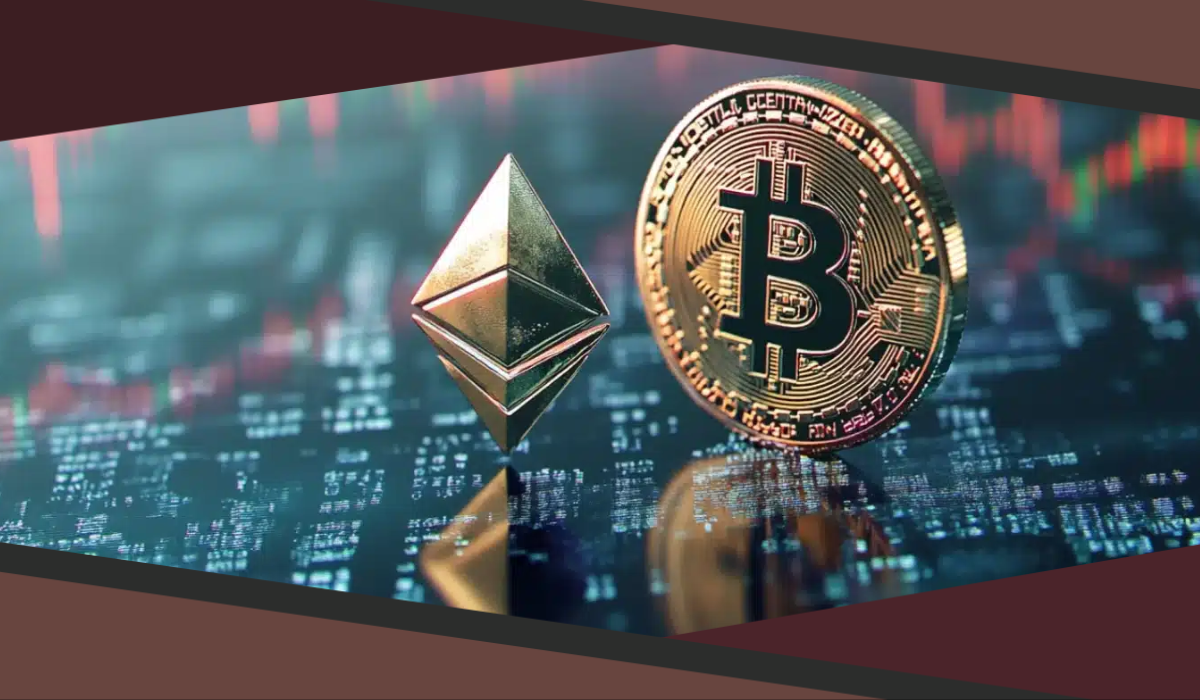
Bitcoin has long been the face of the cryptocurrency market, earning its reputation as “digital gold” thanks to its limited supply and strong appeal as a store of value. However, the crypto landscape has changed significantly over the past few years. Ethereum is no longer viewed as just the second-largest cryptocurrency-it has become the foundation for decentralized finance (DeFi), tokenized assets, stablecoins, and thousands of blockchain applications.
In 2026, Ethereum’s growing adoption by institutions, developers, and enterprises has strengthened its position in the market. While Bitcoin remains the benchmark asset for long-term investors, Ethereum is benefiting from rising blockchain activity and expanding real-world use cases. As a result, many analysts believe ETH is becoming an increasingly important driver of the crypto economy.
This article explores the key factors behind Ethereum’s rise, how it compares with Bitcoin, and whether its momentum can continue in the years ahead.
Ethereum and Bitcoin Serve Different Purposes
Although Bitcoin and Ethereum dominate the cryptocurrency market, they were designed with different goals.
Bitcoin was created as a decentralized digital currency with a fixed supply of 21 million coins. Its scarcity makes it attractive to investors seeking a hedge against inflation and economic uncertainty. For this reason, Bitcoin is often compared to gold and remains the preferred choice for institutions looking for long-term exposure to digital assets.
Ethereum serves a different purpose. Instead of acting solely as a digital currency, it provides a programmable blockchain where developers can build decentralized applications, smart contracts, financial services, NFT platforms, and enterprise solutions. ETH is therefore closely tied to blockchain activity rather than simply investor demand.
This difference explains why Ethereum is increasingly attracting attention as blockchain adoption expands across multiple industries.
Institutional Adoption Is Accelerating
Institutional investment is one of the biggest reasons behind Ethereum’s growing market strength.
Following the success of Bitcoin investment products, many financial institutions have broadened their focus to include Ethereum. Asset managers increasingly view ETH as exposure to blockchain infrastructure instead of just another cryptocurrency.
Ethereum also plays a leading role in emerging sectors such as decentralized finance and tokenized finance, making it attractive to investors looking beyond the traditional digital gold narrative.
As institutional participation continues to grow, Ethereum could benefit from stronger liquidity, greater market stability, and increased long-term demand.
Ethereum Powers the Blockchain Economy
Ethereum’s biggest advantage is its broad ecosystem.
The network hosts many of the largest decentralized finance protocols, decentralized exchanges, NFT marketplaces, and blockchain-based applications. It also supports a significant share of global stablecoin transactions, making it one of the most active blockchain networks in the industry.
Another important growth area is real-world asset (RWA) tokenization. Banks and financial institutions are increasingly using blockchain technology to represent assets such as government bonds, real estate, private credit, and investment funds as digital tokens. Many of these projects are built on Ethereum because of its security, reliability, and mature developer ecosystem.
This growing economic activity creates continuous demand for ETH, as users pay transaction fees using the network’s native cryptocurrency.
Layer-2 Networks Are Expanding Ethereum’s Reach
High transaction fees once limited Ethereum’s adoption, particularly during periods of heavy network activity.
Today, Layer-2 scaling networks such as Arbitrum, Optimism, Base, and zkSync are helping solve this problem. These networks process transactions more efficiently while relying on Ethereum for security and settlement.
As a result, users benefit from faster and cheaper transactions without sacrificing decentralization. Lower costs also encourage developers to launch more applications on Ethereum, further strengthening the ecosystem.
Rather than replacing Ethereum, Layer-2 solutions enhance its scalability and support broader adoption.
Ethereum’s Supply Model Supports Long-Term Value
Ethereum’s economic model changed significantly after its transition to Proof of Stake.
A portion of transaction fees is permanently removed from circulation through the network’s fee-burning mechanism. At the same time, millions of ETH remain locked in staking, reducing the available supply on the market.
Unlike Bitcoin’s fixed issuance schedule, Ethereum’s supply becomes closely linked to network activity. When usage increases, more ETH is burned, creating a deflationary effect that can support long-term value.
This combination of utility and controlled supply has strengthened Ethereum’s investment appeal.
Can Ethereum Overtake Bitcoin?
The possibility of Ethereum surpassing Bitcoin in market capitalization has often been described as the “Flippening.”
Supporters argue that Ethereum’s growing utility gives it stronger long-term growth potential. Its leadership in decentralized finance, stablecoins, tokenization, and enterprise blockchain adoption provides multiple sources of demand beyond speculative trading.
However, Bitcoin continues to enjoy several important advantages. It remains the largest cryptocurrency by market capitalization, benefits from greater brand recognition, and is widely regarded as the safest digital asset for institutional investors.
Instead of replacing Bitcoin, Ethereum is increasingly establishing itself as the infrastructure powering the broader blockchain economy. The two assets may continue serving different roles rather than directly competing.
Challenges Ethereum Still Faces
Despite its strong momentum, Ethereum faces several challenges.
Competition from networks such as Solana, Avalanche, Sui, and Aptos continues to intensify as they offer faster transactions and lower fees. Ethereum must also continue improving scalability to maintain its leadership position.
Regulatory uncertainty remains another factor. Future rules affecting staking, decentralized finance, and digital assets could influence institutional adoption and investor sentiment.
Finally, broader macroeconomic conditions, including interest rates and global liquidity, continue to impact cryptocurrency markets as a whole.
Outlook for Ethereum
Ethereum has evolved into much more than a cryptocurrency. It now serves as the foundation for decentralized finance, tokenized assets, stablecoins, and an expanding range of blockchain applications.
As financial institutions continue adopting blockchain technology, Ethereum is well positioned to benefit from growing network activity and increasing institutional investment. Its large developer community, ongoing technical upgrades, and expanding Layer-2 ecosystem provide additional support for long-term growth.
Although Bitcoin is likely to remain the leading store of value, Ethereum’s role as the infrastructure behind digital finance continues to strengthen. This unique position could allow ETH to capture an even larger share of the cryptocurrency market in the coming years.
Conclusion
Ethereum’s rise against Bitcoin reflects the changing nature of the cryptocurrency industry. Bitcoin continues to dominate as digital gold, while Ethereum has become the leading platform for blockchain innovation and real-world financial applications. Its strength lies not only in price performance but also in the growing ecosystem built around decentralized finance, tokenized assets, stablecoins, and enterprise adoption.
While competition and regulatory challenges remain, Ethereum’s expanding utility gives it a distinct advantage as blockchain technology becomes more integrated into global finance. Rather than replacing Bitcoin, Ethereum is creating its own leadership role by powering the infrastructure of the next generation of digital assets. As adoption continues to grow, ETH is likely to remain one of the most influential cryptocurrencies shaping the future of the market.