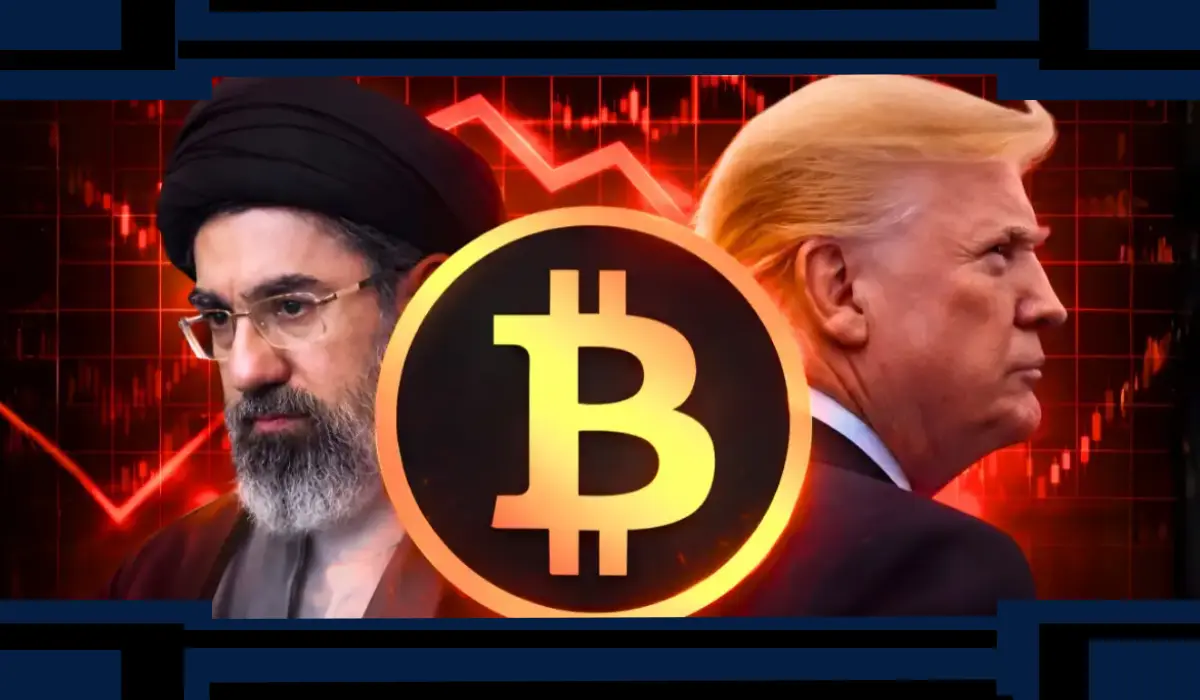
Crypto markets entered a period of renewed volatility as escalating US–Iran tensions weakened investor confidence and interrupted the optimism created by cooling inflation data. Bitcoin and major digital assets faced selling pressure as traders shifted toward safer positions amid rising geopolitical uncertainty.
The latest market decline highlights a major challenge for investors. While slowing inflation has improved expectations for a more supportive monetary environment, geopolitical risks have introduced fresh concerns about energy prices, inflation stability, and global economic growth.
As a result, crypto markets are now balancing two opposing forces: the possibility of easier Federal Reserve policy and the growing impact of international instability.
Crypto Market Declines as Investors Reduce Risk Exposure
Digital assets experienced renewed weakness as geopolitical concerns pushed investors away from riskier investments. Bitcoin led the market decline, while Ethereum and other major cryptocurrencies followed the broader negative trend.
The sell-off reflects a change in investor priorities. Earlier, traders focused on inflation improvements and the possibility of future interest-rate cuts. However, increasing uncertainty around US–Iran relations shifted attention toward global risks.
Unlike earlier crypto cycles, the market now has stronger links with traditional financial systems. Institutional participation, exchange-traded products, and professional investment strategies have increased crypto’s sensitivity to global economic events.
Latest Crypto Market Performance Overview
| Cryptocurrency | Current Price | 24H Price Change | Market Trend | Main Market Driver |
| Bitcoin (BTC) | ~$62,907 | -2.0% | Bearish pressure | US–Iran tensions, profit-taking, stronger dollar concerns |
| Ethereum (ETH) | ~$1,883 | Under pressure | Weak consolidation | Reduced risk appetite and market uncertainty |
| Solana (SOL) | ~$76.11 | Volatile movement | Neutral-to-bearish | Altcoin weakness and lower liquidity |
| XRP (XRP) | ~$1.10–$1.11 | Around -2% | Cautious sentiment | Broader crypto sell-off and investor caution |
| Total Crypto Market | — | Declining momentum | Risk-off phase | Geopolitical uncertainty and macro concerns |
The market reaction shows that investors are currently prioritizing capital protection over aggressive risk-taking.
US–Iran Tensions Create New Market Uncertainty
Geopolitical developments have become the primary catalyst behind the latest crypto market weakness.
Rising tensions between the United States and Iran have increased concerns about potential disruptions in global energy markets. The Middle East remains a critical region for oil supply, and any disruption could affect fuel prices worldwide.
Higher energy prices often create inflation risks because they increase costs across transportation, manufacturing, and consumer industries. For central banks, this creates a difficult policy environment.
If inflation continues to decline, policymakers could consider reducing interest rates. However, renewed inflation pressure from energy markets could delay those decisions.
For crypto investors, this uncertainty creates additional volatility. Digital assets typically perform better when liquidity conditions improve. However, geopolitical shocks often lead investors to reduce exposure to speculative markets.
Cooling Inflation Supports Crypto Recovery Expectations
Before geopolitical concerns dominated headlines, improving inflation conditions provided support for risk assets.
A slowdown in US inflation increased expectations that the Federal Reserve could eventually move toward a less restrictive monetary policy. Lower interest rates generally create a more favorable environment for cryptocurrencies because investors often seek higher returns when borrowing costs decline.
Bitcoin has historically benefited from periods of increased liquidity. When financial conditions become easier, institutional and retail investors often show stronger demand for digital assets.
However, the current situation is more complicated.
Although inflation data has improved, investors remain concerned that geopolitical developments could reverse progress. A sudden increase in energy prices could create new inflation challenges and influence future Federal Reserve decisions.
Therefore, the crypto market is closely watching both economic data and international events.
Bitcoin’s Position as a Risk Asset Remains Clear
The latest decline has renewed debate about Bitcoin’s role in the global financial system.
Many investors consider Bitcoin a long-term store of value because of its limited supply and decentralized structure. However, short-term market behavior shows that Bitcoin often trades similarly to other risk assets.
During periods of uncertainty, investors typically reduce exposure to assets with higher volatility. This pattern has affected Bitcoin during previous global market disruptions.
The increasing involvement of institutional investors has strengthened this connection. Hedge funds, asset managers, and financial institutions now evaluate Bitcoin alongside equities, commodities, and other investment categories.
As a result, Bitcoin prices are influenced by several external factors, including:
- Federal Reserve interest-rate expectations
- US dollar movements
- Global liquidity conditions
- Institutional investment flows
- Geopolitical developments
This changing market structure means crypto investors must monitor broader economic trends rather than focusing only on blockchain developments.
Federal Reserve Policy Becomes a Key Market Driver
The Federal Reserve remains one of the most important factors influencing crypto sentiment.
Cooling inflation has encouraged expectations of potential rate cuts. Lower rates could increase liquidity and improve demand for risk assets.
However, geopolitical uncertainty creates a complicated outlook. If energy prices rise significantly, inflation could remain elevated for longer than expected.
In that scenario, the Federal Reserve may maintain restrictive policies, limiting liquidity growth and creating additional pressure on cryptocurrencies.
Investors are therefore watching upcoming inflation reports, employment data, and central bank comments for clues about future monetary policy.
Institutional Investors Take a More Cautious Approach
Institutional investors have become more selective as markets face conflicting signals.
The improving inflation outlook created optimism earlier, but geopolitical risks have encouraged more defensive strategies. Many investors are waiting for clearer signals before increasing exposure to volatile assets.
Crypto investment products and institutional funds remain important market indicators. Strong inflows could support recovery, while continued outflows may indicate weaker market confidence.
Additionally, the strength of the US dollar remains a major factor. During periods of geopolitical uncertainty, investors often prefer dollar-based assets, which can create additional pressure on Bitcoin and other cryptocurrencies.
Market Outlook: What Comes Next for Crypto?
The next phase of the crypto market will depend on how several major factors develop.
If US–Iran tensions ease and inflation continues declining, investors could return to risk assets. Improved liquidity conditions may support Bitcoin and broader cryptocurrency recovery.
However, prolonged geopolitical uncertainty could keep markets under pressure. Rising energy costs, delayed rate cuts, and stronger demand for safe-haven assets could create further challenges.
Despite short-term volatility, long-term crypto adoption trends remain strong. Institutional involvement, blockchain innovation, and expanding digital asset infrastructure continue to support the industry’s broader growth story.
Conclusion
Crypto markets are facing renewed pressure as US–Iran tensions challenge the positive inflation narrative that had supported investor confidence.
While cooling inflation has increased expectations for a more favorable monetary environment, geopolitical uncertainty has created a new layer of risk. Bitcoin’s recent weakness shows that cryptocurrencies remain closely connected to global economic conditions.
The market’s next major move will likely depend on whether inflation improvements can continue despite geopolitical challenges. For investors, the current environment reinforces the importance of tracking monetary policy, energy markets, and global developments alongside crypto fundamentals.