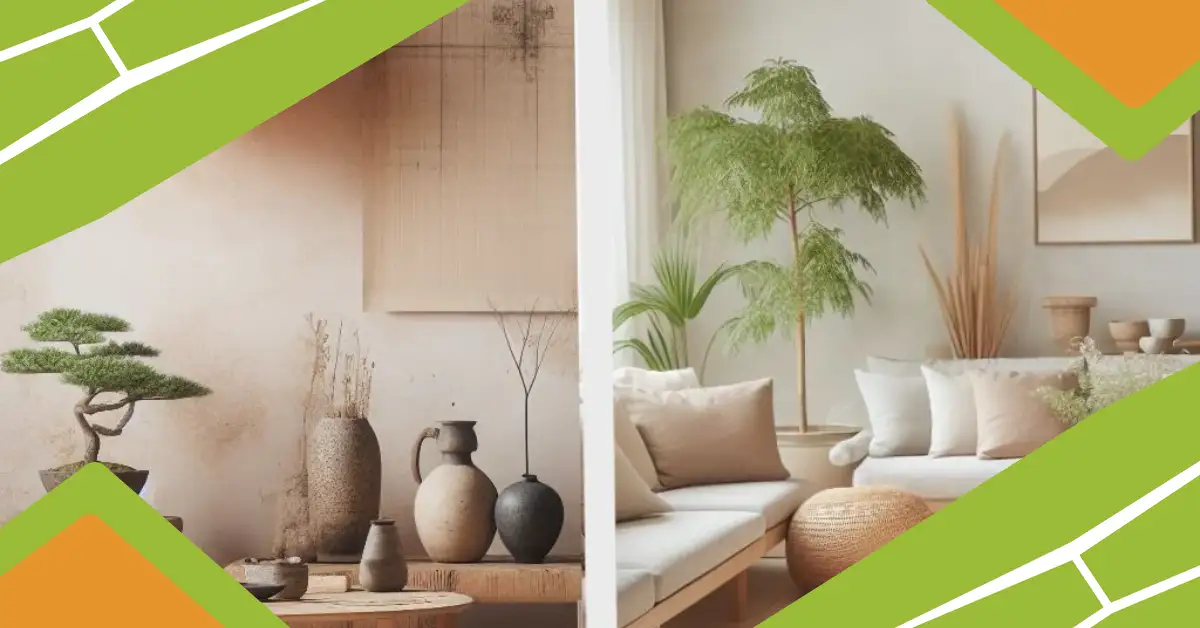
Interior design trends are increasingly shifting toward calm, intentional, and nature-inspired living spaces. Among the most searched and admired aesthetics today are Japandi interior design and Wabi-Sabi design philosophy. While both styles share roots in Japanese minimalism and a love for natural materials, they are not the same.
Understanding the difference between Japandi vs Wabi-Sabi interior design helps homeowners, designers, and decor enthusiasts create spaces that are not only visually appealing but also emotionally grounding. This guide explores their core philosophies, design elements, and how they differ in practice.
What is Japandi Interior Design?
Japandi interior design is a hybrid aesthetic that blends Japanese minimalism with Scandinavian functionality and warmth. It is one of the most popular modern interior styles because it balances simplicity with comfort.
At its core, Japandi focuses on creating spaces that feel clean, practical, and serene without becoming cold or sterile. The Japanese influence brings in mindfulness, craftsmanship, and restraint, while Scandinavian design contributes coziness, light, and functionality.
In a Japandi-inspired space, everything has a purpose. Furniture is carefully selected for both form and function. The color palette tends to be neutral soft greys, beige, off-white, muted greens, and earthy browns. Natural materials like wood, linen, bamboo, and stone are heavily used to create warmth and texture.
What makes Japandi especially appealing in modern homes is its balance between aesthetic beauty and everyday usability. It’s not just about looking minimal; it’s about living minimally in a way that feels intentional and comfortable.
A typical Japandi interior emphasizes clean lines, uncluttered spaces, and low-profile furniture. However, unlike stark minimalism, it avoids feeling empty by incorporating soft textiles, organic shapes, and carefully curated decor pieces.
What is Wabi-Sabi Interior Design? The Beauty of Imperfection
Wabi-Sabi interior design is deeply rooted in a traditional Japanese philosophy that celebrates imperfection, impermanence, and authenticity. Unlike Japandi, which is a fusion style, Wabi-Sabi is purely philosophical and cultural in origin.
The concept of Wabi-Sabi is not just about how a space looks, but how it feels. It encourages appreciation for natural aging, wear and tear, and the unique character that time adds to objects and environments.
In Wabi-Sabi interiors, perfection is not the goal. Instead, beauty is found in cracked ceramics, weathered wood, uneven textures, and handmade objects that show human touch. Spaces often feel raw, organic, and deeply personal.
Lighting is typically soft and natural, allowing shadows and imperfections to become part of the visual experience. Instead of polished finishes, Wabi-Sabi embraces rough textures like unfinished wood, stone, clay, and plaster.
This design approach is less about decoration and more about emotional resonance. A Wabi-Sabi home feels lived-in, calm, and grounded in reality. It encourages slowing down and appreciating simplicity in its most natural form.
Japandi vs Wabi-Sabi: Core Philosophical Differences
Although Japandi and Wabi-Sabi may appear similar at first glance, their philosophies differ significantly.
Japandi is primarily a design fusion focused on functionality and modern living, while Wabi-Sabi is a philosophical acceptance of imperfection and impermanence.
Japandi seeks harmony through structure, balance, and intentional design choices. Everything is curated and placed with purpose. In contrast, Wabi-Sabi embraces randomness, asymmetry, and natural evolution over time.
Japandi interiors often feel polished and organized, even when minimal. Wabi-Sabi interiors feel more organic, raw, and emotionally expressive.
To simplify the distinction:
- Japandi is about controlled minimalism with comfort
- Wabi-Sabi is about embracing imperfection and transience
- Japandi is design-driven
- Wabi-Sabi is philosophy-driven
While both styles value simplicity, Japandi leans toward modern refinement, whereas Wabi-Sabi embraces imperfection as beauty.
Design Elements: How Japandi and Wabi-Sabi Differ in Practice
When comparing Japandi vs Wabi-Sabi interior design, the differences become even clearer in how spaces are actually styled.
Japandi Design Characteristics
Japandi interiors are carefully curated. Furniture tends to be low, sleek, and functional. The design prioritizes open space and visual clarity. Every piece has a purpose, and clutter is strictly avoided.
The materials used are natural but refined light oak wood, smooth ceramics, soft wool, and linen. The color palette is restrained and harmonious, often blending warm neutrals with cool undertones.
Lighting is soft but structured, often combining natural daylight with minimalist fixtures like pendant lamps or concealed lighting. The overall effect is calm, modern, and balanced.
Japandi also places strong emphasis on craftsmanship and quality. Instead of many decorative items, a few well-designed pieces define the space.
Wabi-Sabi Design Characteristics
Wabi-Sabi interiors feel more spontaneous and less curated. Furniture may appear aged, irregular, or handmade. There is a strong appreciation for natural decay and authenticity.
Instead of polished surfaces, Wabi-Sabi uses raw textures, uneven plaster walls, distressed wood, handmade pottery, and natural stone. These imperfections are not hidden but highlighted as part of the aesthetic.
Color palettes are earthy and muted but often deeper and more varied than Japandi. Think browns, charcoal greys, faded greens, and rust tones.
Lighting is soft, often natural or diffused, allowing shadows to play a role in the atmosphere. The space feels quiet, meditative, and deeply connected to nature.
Unlike Japandi, which aims for visual harmony, Wabi-Sabi embraces asymmetry and unpredictability.
Japandi vs Wabi-Sabi: Key Differences in Lifestyle & Atmosphere
Beyond visuals, these two styles influence how people experience their living spaces.
Japandi interiors are ideal for those who prefer structure, organization, and modern simplicity. They suit urban lifestyles where functionality and aesthetics must coexist efficiently. The atmosphere feels calm but controlled, like a well-designed retreat.
Wabi-Sabi, on the other hand, resonates with people who value emotional depth, mindfulness, and authenticity. It creates a slower, more reflective environment where imperfections are accepted rather than corrected. The atmosphere is more poetic and introspective.
A simple way to understand the contrast is:
Japandi feels like a thoughtfully designed modern home.
Wabi-Sabi feels like a naturally evolved living space shaped by time.
Both styles reduce visual noise, but they do so in different ways: Japandi through design precision, and Wabi-Sabi through acceptance of imperfection.
Similarities Between Japandi and Wabi-Sabi
Despite their differences, Japandi and Wabi-Sabi share several important similarities that explain why they are often confused.
Both styles prioritize minimalism and reject excess decoration. They emphasize natural materials and a connection to nature. Both also value craftsmanship, simplicity, and calm environments.
More importantly, they both move away from fast, trend-heavy interiors and encourage timeless design choices that feel sustainable and meaningful.
They also align with modern wellness trends, where homes are designed to reduce stress and promote mental clarity.
However, while they share a foundation of simplicity, their interpretation of beauty is what separates them.
Which Style Should You Choose?
Choosing between Japandi and Wabi-Sabi depends largely on your personality and lifestyle.
If you prefer clean lines, organized spaces, and a balance between comfort and modern design, Japandi may be the better fit. It works well in apartments, contemporary homes, and urban environments where functionality is essential.
If you are drawn to organic textures, imperfect beauty, and spaces that feel deeply personal and emotional, Wabi-Sabi may resonate more with you. It suits those who appreciate slow living and natural evolution in design.
Some homeowners even blend both styles, creating spaces that combine Japandi’s structure with Wabi-Sabi’s authenticity. This hybrid approach can result in interiors that are both functional and emotionally rich.
Final Thoughts
The debate between Japandi vs Wabi-Sabi interior design is not about which is better, but about what kind of living experience you want to create.
Japandi offers a structured, functional, and modern interpretation of minimalism, while Wabi-Sabi provides a philosophical embrace of imperfection, impermanence, and natural beauty.
Both styles encourage you to slow down, simplify your surroundings, and reconnect with what truly matters in your living space. Whether you lean toward Japandi’s refined calm or Wabi-Sabi’s raw authenticity, both paths lead to a more mindful and intentional way of living.
Leave a Reply