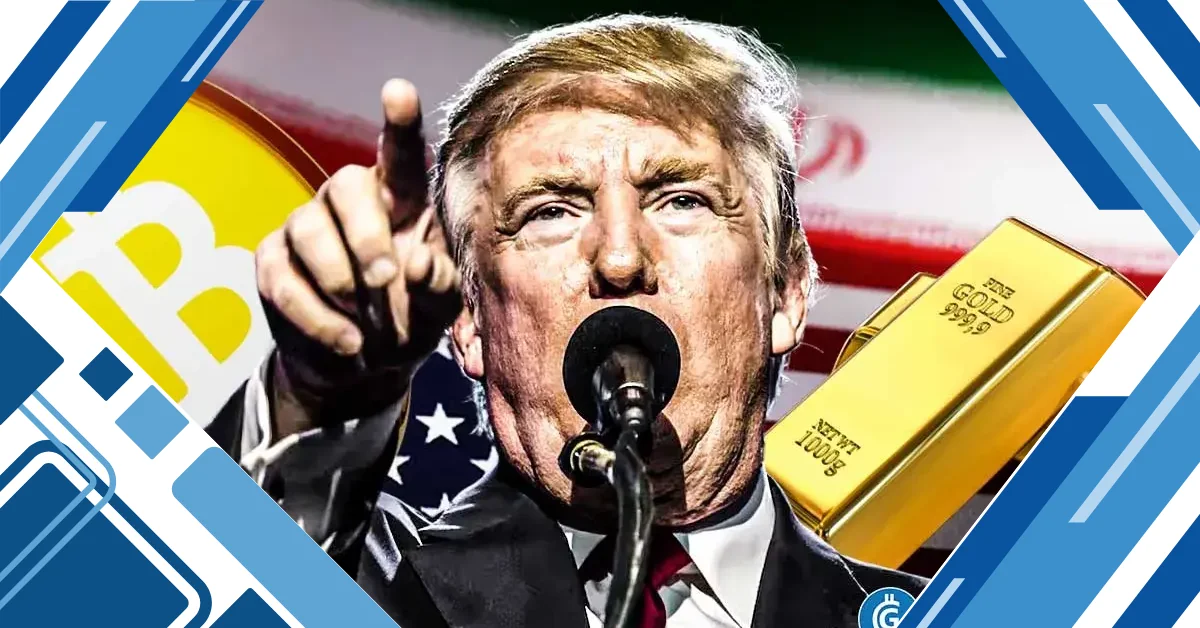
Recent geopolitical developments have significantly affected the financial markets, notably cryptocurrencies and precious metals. A statement by former President Donald Trump asserting that the United States possesses “virtually unlimited” munitions stockpiles” has heightened fears of an extended US-Iran conflict. This escalation has caused declines in Bitcoin and gold prices, reflecting investor anxiety and shifts in market sentiment. Understanding the implications of such statements and their impact on the markets is crucial for both investors and observers of global financial trends.
The Context of Trump’s Statement and Its Geopolitical Significance
Background of US-Iran Tensions
Throughout recent years, tensions between the United States and Iran have been a persistent source of concern for global stability, especially in the Middle East. Incidents ranging from military strikes to diplomatic standoffs have kept the region and global markets on edge. The state of conflict often influences the prices of safe-haven assets like gold and cryptocurrencies such as Bitcoin.
Donald Trump’s Recent Remarks
On his social media platform Truth Social, Donald Trump stated that the US’s munitions stockpiles are “never been higher or better,” emphasizing their “virtually unlimited” nature. He also suggested that the US is prepared for a war that could last “forever,” signaling a readiness to escalate tensions with Iran. Such comments can be interpreted as a show of strength but also as a warning of a potentially prolonged conflict, which has stirred market uncertainty.
Market Reactions: Why Bitcoin and Gold Slip
Bitcoin’s Response to Geopolitical Escalation
Bitcoin, often regarded as digital gold and a hedge against traditional financial instability, initially reacted to geopolitical tensions with heightened volatility. However, in this context, the news of the US expanding its munitions stockpile contributed to a risk-off sentiment. Currencies and assets perceived as safe havens gained appeal, but the immediate market reaction saw Bitcoin dropping below the $68,000 mark amid profit-taking and risk reassessment.
Specifically, Bitcoin experienced a decline of approximately 3%, trading at around $67,946 with increased trading volume, reflecting heightened trader uncertainty and short-term profit taking. Technical analysis indicates that Bitcoin remains under pressure, with prices moving within narrowing Bollinger Bands and trading below key moving averages, hinting at continued volatility.
Gold’s Sudden Drop Below $5,300
Contrary to the traditional perception of gold as a safe haven, its prices also slipped sharply, losing about $100 per ounce within a short period. The price dropped below $5,300, driven by increased US dollar strength and rising US Treasury yields, which often inversely affect gold prices.
The decline was further exacerbated by the escalation in geopolitical tensions and signals from the US that hint at an extended conflict. While gold typically benefits from geopolitical risk, in this instance, dollar strength and rising bond yields—indicative of market expectations for potential US interest rate adjustments—overpowered its appeal.
Furthermore, Iran’s declaration of closing the Strait of Hormuz and threats against vessels have fueled concerns over energy supply and inflationary pressures, contributing indirectly to short-term volatility in gold and oil prices.
Implications for Investors and Future Trends
Market Sentiment and Safe-Haven Assets
The current scenario underscores the sensitivity of both cryptocurrency and gold markets to geopolitical statements and military posturing. While traditionally viewed as safe-havens, their performance is now closely tied to broader macroeconomic factors, including currency fluctuations, inflation expectations, and geopolitical stability.
Investors should remain cautious, as such statements can lead to short-term volatility with potential for sharp rebounds or further declines depending on geopolitical developments.
Potential Long-Term Effects
- Extended conflict risks: Prolonged hostilities could eventually boost the appeal of gold and cryptocurrencies as hedge assets.
- Market volatility: Increased geopolitical risks often lead to heightened market swings, demanding strategic risk management.
- Policy responses: Expect potential shifts in monetary policies, with the Fed possibly delaying rate cuts due to inflationary pressures stemming from geopolitical instability.
Frequently Asked Questions
How does Donald Trump’s statement affect the financial markets?
Trump’s claim of “unlimited munition stockpiles” has intensified concerns over an extended US-Iran conflict. This has led to risk aversion, causing declines in assets like Bitcoin and gold, as investors seek safety in USD and other safe-haven instruments.
Why did gold prices fall despite being a safe haven?
Gold prices are also influenced by US dollar strength and rising Treasury yields. In this case, the US dollar’s rally and bond market signals overshadowed geopolitical risks, pushing gold prices downward temporarily.
Is Bitcoin a reliable hedge during geopolitical tensions?
Bitcoin has shown both resilience and volatility in such scenarios. While it is increasingly viewed as digital gold, its performance depends on market sentiment, liquidity, and macroeconomic factors at play during geopolitical crises.
What should investors do during such market conditions?
Investors should stay informed about geopolitical developments, consider diversification, and adopt risk mitigation strategies. Short-term volatility may present trading opportunities, but long-term investors should focus on fundamentals.
Conclusion
The statement by Donald Trump about the US’s “virtually unlimited munition stockpiles” amid escalating US-Iran tensions has underscored the fragility of current geopolitical stability and its impact on financial markets. Both Bitcoin and gold have shown susceptibility to such geopolitical risk, with short-term declines reflecting market caution. As the situation evolves, investors should monitor geopolitical signals closely and adjust strategies accordingly, understanding that such conflicts can influence macroeconomic factors including inflation, currency strength, and asset prices all at once.
Leave a Reply