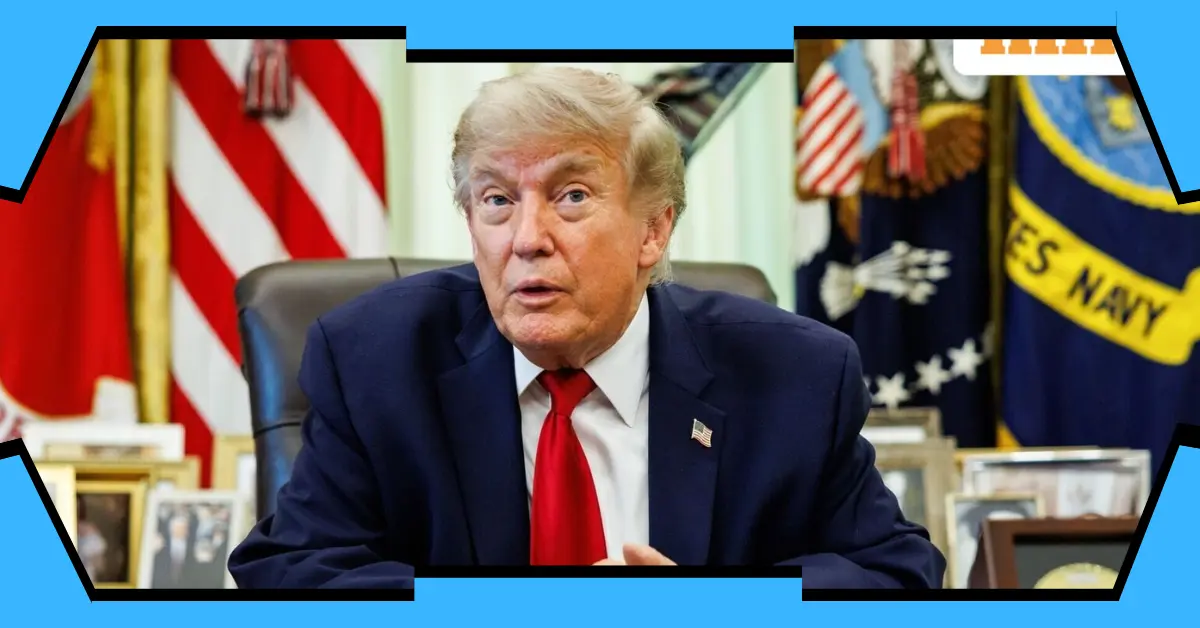
Donald Trump’s recent remark-“I could know about it. I didn’t”-has triggered renewed scrutiny over his reported $1.4 billion earnings from cryptocurrency-related ventures. The comment came after updated financial disclosures indicated that digital assets now represent one of the largest sources of income linked to Trump and his family.
The statement has intensified debate in Washington about financial transparency, presidential business entanglements, and the expanding role of cryptocurrency in high-level politics.
What Sparked the Controversy?
The discussion began after 2025 financial disclosure reports indicated that Trump and his affiliated business structures generated more than $1.4 billion from crypto-related activities. These earnings reportedly stem from a mix of token-based ventures, branding deals, and blockchain-linked investment structures associated with Trump’s business ecosystem.
Media reporting suggests that firms tied to the Trump family, including ventures operating in the digital asset space, contributed significantly to this total. In particular, crypto token sales and politically branded digital assets have been highlighted as major revenue drivers.
The scale of these earnings has raised questions not only about financial transparency but also about how such income is tracked, managed, and disclosed while holding public office.
What Trump Actually Said
When asked to explain the massive earnings, Trump responded that he did not personally manage or actively track the investments. His key justification was:
He was not directly involved in financial operations and relied on independent management structures.
In the interview, he framed the situation as a matter of delegation, arguing that his assets are handled by his family and external financial managers through arrangements similar to blind or semi-blind trusts.
The controversial phrase-“I could know about it. I didn’t”-was interpreted as Trump acknowledging that he could have been aware of the earnings but chose not to monitor them closely.
Why the Comment Matters Politically
The controversy extends beyond the dollar figure. At its core, it highlights long-standing concerns about how presidents manage private wealth while in office.
Ethics experts argue that the scale of crypto-related earnings makes full detachment difficult to accept at face value. Unlike traditional assets such as real estate, cryptocurrency ventures are highly dynamic, often requiring active oversight, branding involvement, and ongoing strategic decisions.
The issue becomes more sensitive because political visibility can directly influence crypto markets. Digital assets tied to high-profile figures often experience price movements based on public statements, regulatory signals, or political developments.
The Role of Crypto in Trump-Linked Business Ventures
Reports indicate that Trump’s crypto-related income is not drawn from a single source but spread across multiple channels within a broader digital asset ecosystem.
A significant portion is attributed to token-based projects associated with Trump-branded ventures. These include meme-style digital tokens and blockchain projects that rely heavily on branding, public attention, and speculative trading activity.
Analysts note that such assets are especially volatile, often experiencing rapid price swings tied to political news cycles rather than traditional financial fundamentals. This has amplified both profits and risks within the ecosystem.
Criticism and Conflict-of-Interest Concerns
Critics of Trump’s financial structure argue that the overlap between political influence and crypto earnings creates a potential conflict of interest. They point out that regulatory decisions, public messaging, and political positioning can all indirectly impact the value of digital assets associated with his name.
Some ethics analysts have described this as a “feedback loop,” where political authority and private financial gain may unintentionally reinforce each other.
Supporters, however, maintain that Trump’s financial arrangements are consistent with long-standing practices where business interests are managed by family members or delegated entities while he focuses on governance.
Market Reaction and Public Perception
The crypto market linked to politically branded assets has shown high volatility. Prices of Trump-associated tokens have reportedly surged during periods of heightened media attention, only to fall sharply during corrections or negative sentiment cycles.
This volatility has led to mixed outcomes for investors. While early participants in some token offerings saw gains, others entered at peak valuations and experienced significant losses as prices corrected.
Public perception has therefore split between viewing the ventures as innovative branding-driven finance and seeing them as highly speculative instruments amplified by political visibility.
Legal and Ethical Context
From a legal standpoint, experts note that current regulations do not fully prohibit public officials from maintaining complex business structures, especially when managed through trusts or delegated entities.
However, the ethical debate is more complex. Transparency advocates argue that even indirect involvement in such large-scale financial ecosystems raises questions about disclosure standards and accountability expectations for sitting presidents.
The lack of clear regulatory boundaries for crypto-linked political assets further complicates the issue, leaving significant gray areas in enforcement and interpretation.
Conclusion
Trump’s statement-“I could know about it. I didn’t”-reflects the broader tension between delegation and accountability in modern political finance. While he emphasizes limited direct involvement in crypto earnings, the scale and visibility of the reported $1.4 billion raise unavoidable questions about oversight and transparency.
As cryptocurrency continues to intersect with political branding and public office, this case underscores a growing challenge for regulators and ethics watchdogs: defining clear boundaries in a financial system where influence itself can generate value.
The controversy is likely to remain central in discussions about political ethics, digital assets, and the evolving relationship between governance and decentralized finance.
Leave a Reply